Updated September 2026. Written and checked by the technicians at Safe & Secure Locksmith, 4105 Macdonald St, Vancouver. Every figure below matches our published price list. Call 604-734-7233 for a quote before anyone is dispatched.
Three separate questions
People shop for a safe as though it were one product with a quality level. It is three questions that happen to be answered by the same box: will it survive a fire, will it resist someone attacking it, and can it be carried away? A safe can be excellent at one and useless at the others.
Get the three straight before you look at prices, because the wrong safe protects the wrong thing.
Fire rating: protecting paper
A fire rating states how long the inside stays below a temperature threshold in a standardised furnace test. A common residential rating is one hour with the interior held below about 177 degrees Celsius, which is chosen because paper chars above roughly 200.
Two things people miss. First, the rating is a duration, and a house fire in a room with a lot of fuel can exceed it. Second, paper and media have different thresholds: hard drives, memory cards and photographs are damaged far below the temperature that chars paper, so a media rating is a separate and much stricter specification.
Fire safes are usually built from a light steel shell with an insulating fill. That construction is excellent against heat and offers very little against a crowbar, which is exactly why the second question matters.
Cash rating: resisting attack
A cash or burglary rating describes how long a safe resists a defined attack with defined tools. In North America the common labels are RSC, meaning it survived a five-minute attack with basic hand tools, and the commercial TL series: TL-15 and TL-30 mean fifteen or thirty minutes against a much wider tool set.
Note what those numbers are. They are minutes of an expert's time with the right tools, not an absolute barrier. The purpose is to buy enough time that an intruder gives up or gets caught. Fifteen focused minutes is a long time in a house that has an alarm and neighbours.
Insurers often quote a cash-in-safe limit against a rating, and that limit is a useful sanity check on how much protection you are actually buying. Ask your insurer before you buy rather than after a claim.
Bolting: the part people skip
This is the failure we see most. A good safe that was never bolted down is a box with all your valuables helpfully collected in one place, and two people carry it to a vehicle in under a minute. It is then opened at leisure somewhere else, where the rating means nothing.
Bolt it. Almost every quality safe has pre-drilled anchor holes in the base and often the back. Into a concrete slab, use sleeve or wedge anchors. On a timber floor, bolt through into joists rather than into the subfloor alone. Put it in a corner so two sides are unusable for leverage, and do not put it somewhere a pry bar has room to work.
Placement matters as much as anchoring. A closet floor in an interior room beats a garage, which is both easier to reach and hotter in a fire. We install and anchor safes as part of the job: safes Vancouver.
Locks on the safe itself
Mechanical dial locks are slow to open and never run out of battery. Electronic keypads are fast and take a battery, which will die at an inconvenient moment; a good one keeps the code through a battery change. Biometric locks are convenient and the cheap ones have poor false-reject rates in the cold, which matters more than the marketing suggests.
Whichever you choose, record the combination somewhere that is not inside the safe, and change it when anyone who knew it no longer should. Combination changes are $80 to $150 and residential opening starts at $150 if you are locked out of your own safe. Commercial TL-15 or TL-30 opening starts at $300. The sheet is on the prices page.
What size
Buy larger than your current list. Everyone fills a safe faster than they expect, and a second small safe is worse than one adequate one. Measure the internal height against the tallest thing you want to store, remembering that shelves and the door mechanism eat internal space.
What actually goes in
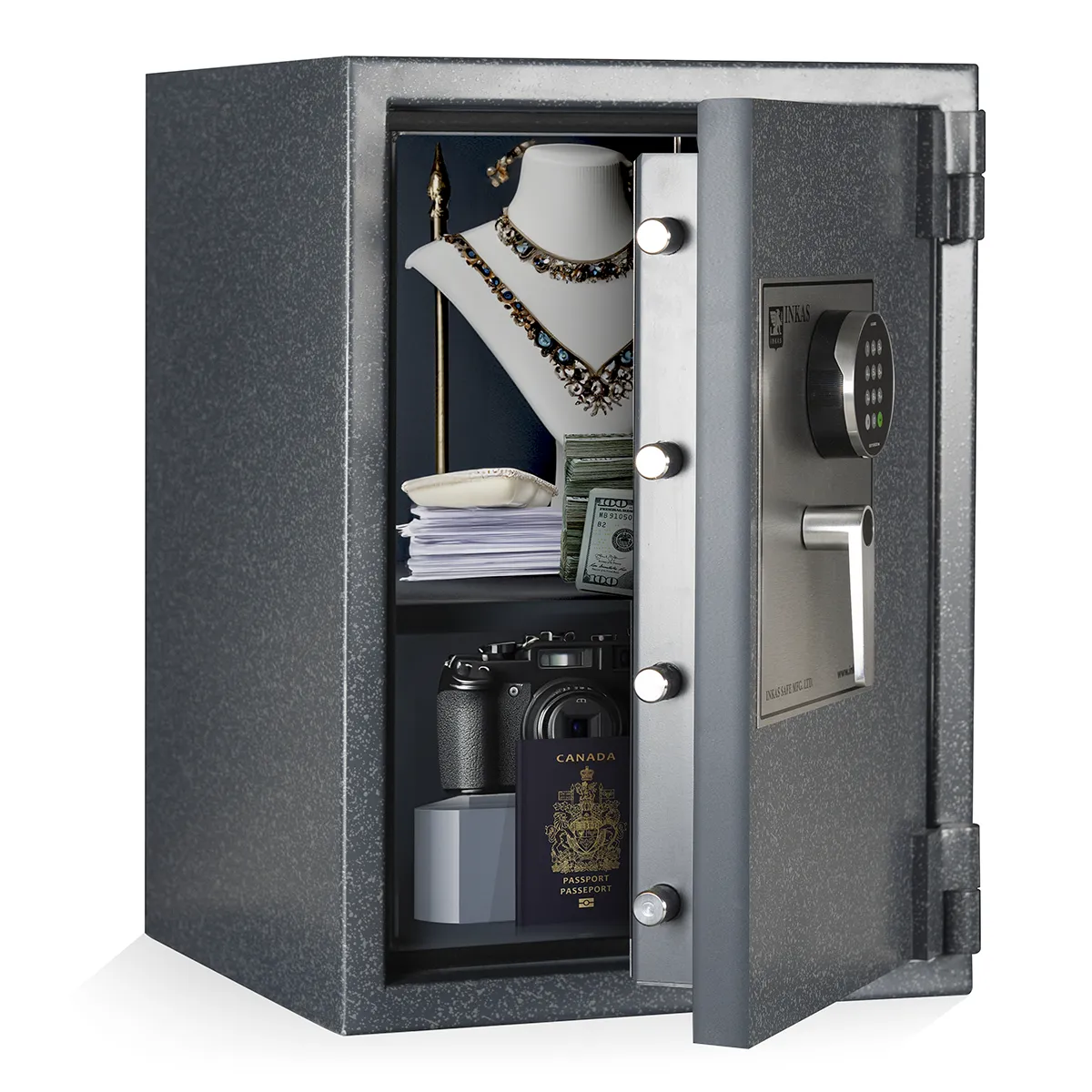
Passports, birth certificates, property and vehicle documents, wills, an inventory of the house for insurance, spare car keys, jewellery, and a small amount of cash. A copy of your important documents scanned to encrypted cloud storage is a good companion to the safe, because a fire that beats the rating is survivable if the data exists elsewhere.
Do not drill it yourself
If you are locked out of a safe, a wrong drill point destroys the relocker and turns a straightforward opening into an expensive one. We exhaust non-destructive routes first, every time. Same-day help is on 604-734-7233, and the related reading is the home security checklist and residential locksmith.
Article history
Updated September 2026. This page now carries the material from the older fire safe versus burglary safe article, which covered the ratings half of the same question. One page, current prices.