Most people buy a safe the way they buy a suitcase — by size and price. Then a house fire, a break-in, or an insurance claim reveals the safe was rated for none of the things it was actually asked to survive. The label on a safe is a spec sheet, not a marketing sticker, and reading it correctly is the difference between protected valuables and a very expensive box.
The quick version: match the fire rating to what you're storing (paper documents need lower heat tolerance than hard drives or heirloom photos), match the cash rating to the actual value of what's inside — not the price you paid for the safe — and always bolt the safe to a structural floor or wall, ideally in a spot that isn't the first place a burglar looks. Get any one of these three wrong and the other two barely matter.
Fire ratings: minutes, temperature, and what's inside matters
Fire ratings (often shown as "30 minutes at 1200°F" or similar UL/ETL-style labels) tell you how long the safe's interior stays below a critical temperature during a standardized fire test. Paper starts to char around 400°F, but digital media, film, and USB drives can be damaged well below that — often around 125°F.
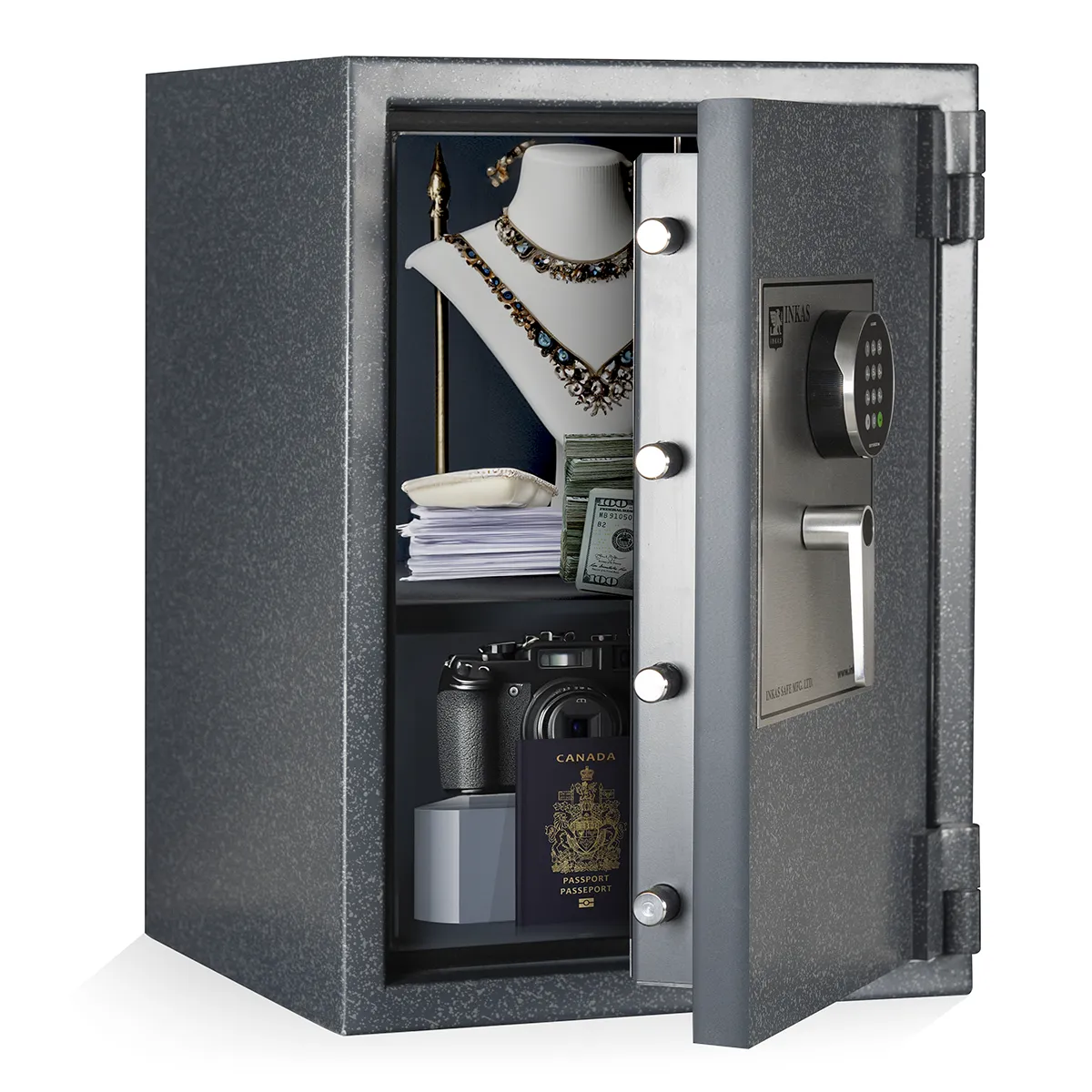
- Documents and cash. A standard 30- to 60-minute fire rating at 1200°F is usually sufficient for household paperwork, passports, and jewelry.
- Digital media and photos. Look for a specific media-rated safe or a separate fireproof media box rated for lower interior temperatures, since ordinary fire safes don't protect electronics.
- Firearms. Fire ratings on gun safes vary wildly between manufacturers — check the independent test temperature and duration, not just the marketing claim on the box.
One detail people miss: fire rating is about heat, not flood or water from sprinklers and hoses. If you're storing irreplaceable documents, a safe rated for both fire and water immersion is worth the extra cost.
Cash ratings: insurance companies read these, even if you don't
A cash rating (sometimes called a security or burglary rating) measures how much cash value the safe is certified to protect against forced entry — think pry bars, drills, and grinders, not just a fire. European safes often use the EN 1143-1 standard, expressed in cash ratings from around £2,000 up to £100,000+, while North American safes may reference UL ratings like TL-15 or TL-30, indicating the number of minutes the safe resisted tools in lab testing.
This is the number your home insurance provider actually cares about. Many policies cap unsecured valuables at a few thousand dollars unless they're locked in a safe with a matching or higher cash rating — so before you buy, check your policy's single-item and aggregate limits, then buy a safe rated above them, not just "sturdy-looking."
A safe is only as good as the weakest number on its label — fire rating, cash rating, or the bolts holding it down.
Where to bolt it: the decision that gets skipped most
An unbolted safe isn't a safe — it's a very heavy gift box for anyone with a hand truck. Even a 200-pound unit can be walked out the door in under two minutes by two people. Bolting into a concrete slab or into floor joists (never just drywall) turns a portable object into a fixed obstacle that a burglar has to defeat on-site, under time pressure.
- Closets over bedrooms. Popular, but predictable — it's the first place most intruders check.
- Garage floors. Great for bolting into concrete, but temperature swings and moisture can affect contents over time; add a moisture absorber.
- Basement or utility rooms. Often the best combination of structural floor access and low visibility.
- Avoid exterior walls. They're easier to attack from outside and more exposed to fire and water intrusion during a structure fire.
For businesses, cash-handling areas need safes bolted where staff can access them quickly but customers never see them — a detail our COMMERCIAL LOCKSMITH VANCOUVER clients ask about often when setting up back-office security.
Sizing for what you'll actually store — not what you own today
Buy one size class larger than you think you need. Safes fill up fast once you start storing passports, spare car key fobs, jewelry, external hard drives, and important contracts together, and cramming items in defeats the fire-sealing gaskets designed to keep heat and smoke out.
Professional installation isn't optional for heavier or larger units
Bolting a safe correctly means drilling into the right substrate, using the manufacturer-specified anchor bolts (not generic hardware store bolts), and torquing them so the safe can't be pried loose with a crowbar. Get it wrong and you've spent real money on a rating that never gets tested the way it was designed to be.
If you're weighing fire versus cash ratings for your home or business, or you need a safe supplied, delivered, and properly bolted in place, our team at SAFES VANCOUVER can walk you through options that match your insurance requirements and the layout of your space. We also handle broader security upgrades through our RESIDENTIAL LOCKSMITH VANCOUVER services if you're reviewing your whole home at once. Reach out and we'll help you pick a safe that actually does its job when it matters.
Frequently asked questions
What's the difference between a fire rating and a cash rating?
Fire rating measures how long the interior stays below a damaging temperature during a fire; cash rating measures how much monetary value the safe is certified to protect against forced entry by burglary tools.
Do I really need to bolt my safe to the floor?
Yes — an unbolted safe, regardless of its ratings, can simply be carried away, which defeats its entire purpose against theft.
Can one safe have both a good fire rating and a good cash rating?
Yes, many quality safes are dual-rated for fire and burglary resistance, but they cost more than single-purpose models, so check both labels rather than assuming one covers the other.