A safety moment works when it is short, specific, and about something the team can change that week. Most idea lists cover ergonomics, ladders, and spill response, which your health and safety program already handles.
Physical security is the gap. Who holds a key, who props the back door, what happens when a fob goes missing: workplace safety topics that almost nobody raises at a huddle. We run a locksmith shop at 4105 Macdonald St in Kitsilano, and the Monday morning calls usually trace back to a two minute conversation nobody had.
Below are eleven security safety moments. Each has a talking point to read aloud and one action to close it out. Run one a week.
How to run a security safety moment in five minutes
The format matters more than the topic. A moment that ends without an owner and a date is just a chat.
- Read the talking point out loud rather than paraphrasing it.
- Ask the room one question and wait through the silence.
- Name the action, the owner, and the due date.
- Log one line: date, topic, action, done or not done.
A topic that needs longer than five minutes needs a work order, not a huddle.
Eleven security safety moments you can run this quarter
1. Who actually holds a key to this building
Most businesses cannot name every person holding a working key. The list grows quietly: a manager who moved on, a contractor from a renovation, the alarm company, a cleaner who left in the spring. A key you cannot account for is an unlocked door you do not know about.
This week: list every exterior key and who holds it. Put the ones you cannot name under a heading called unaccounted. That number is the finding.
2. The key that never came back
Offboarding checklists cover the laptop, the payroll file, and the email account. The key is the item people forget, and it is the only one that still opens the building a year later. Trusting someone is not the same as controlling access.
This week: add a key and fob line to the offboarding checklist, and set the trigger now. One workable rule: any exterior key not returned within 48 hours gets that cylinder rekeyed.
3. Holding the door for a stranger
Tailgating is the most common way someone gets past a controlled door, and it takes no skill. Someone carrying two coffees, a delivery box, or a lanyard that looks close enough walks in behind a person being polite. The reader did its job. The door did not.
This week: agree on one sentence the team can use without feeling rude, such as, sorry, I have to let you badge in yourself. Say it out loud once so it is easier to use later.
4. The propped door
The fire exit wedged open for a delivery, the loading door held with a brick during a break, the rear door left on the latch because the keypad is slow. Each one turns a locked building into an open one, usually at the quietest hour.
This week: walk the building during your busiest delivery window and note every propped door. If the same door keeps showing up, treat it as a workflow problem rather than a discipline problem.
5. One lost master key is not one lost key
A master key opens everything it was cut for. Lose a sub key and you rekey one door. Lose a master and you are looking at every cylinder on the system. Issue masters to as few people as the job requires.
This week: count the master keys that are out and who holds them. If the number surprises you, that is the result. Our commercial locksmith service for Vancouver businesses explains how master systems are structured.
6. Lockup at close, checked by two people
Closing is when attention is lowest. The person locking up is tired and repeating a sequence they have done hundreds of times, which is exactly how a rear door gets missed. A second person catches it in under a minute.
This week: write the close sequence in order: rear door, side gate, roller shutter, alarm, front deadbolt. Have two people initial it, and post it where the keys hang.
7. Where the spare key really lives
Under the till, above the door frame, in the unlocked drawer by the register, taped under a planter. Those are the first four places anyone would check, so they are hiding places, not storage.
This week: find every spare key on site, move them into a lockable key cabinet with a sign out sheet, and remove any key stored outside the building.
8. The fob that went missing on Friday
A missing fob is easier to handle than a missing key, and that advantage only holds if someone reports it. Deactivating a credential takes a minute. Waiting until Monday in case it turns up hands over a whole weekend.
This week: agree that a lost fob gets reported the same day, then name the person who can deactivate it and the backup for when they are away.
9. A key stamped do not duplicate is not protected
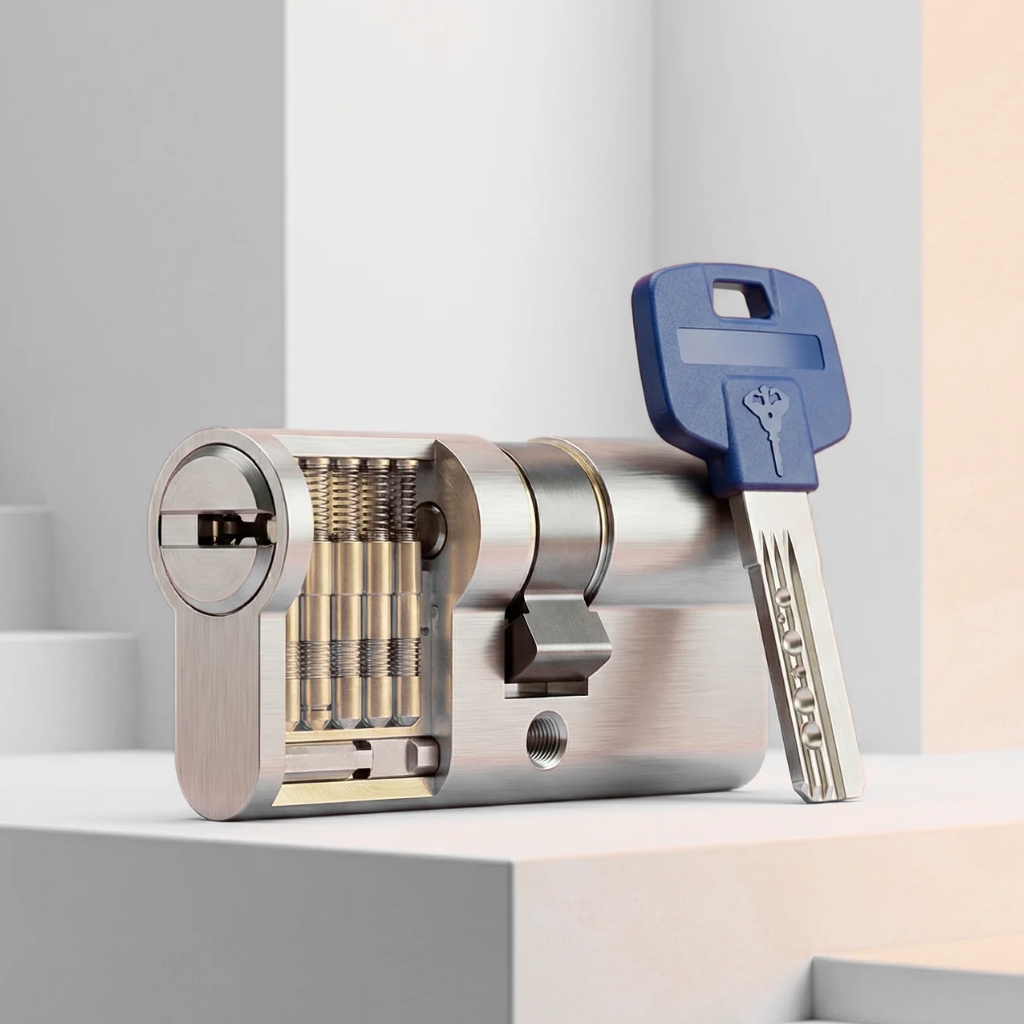
That stamp is a request, not a restriction. Ordinary keyways can be copied at plenty of counters, and the wording on the bow does not stop the machine. Real control comes from a restricted keyway, where blanks are not sold openly and duplication is tied to an authorised signature list.
This week: look at your actual building keys. If they carry the stamp but sit on a standard keyway, assume copies may already exist. Price a restricted option using our guide to high-security locks and restricted keyways.
10. Rekey or replace, and when each one applies
After a break in or a sudden departure, the question is whether the hardware is still sound. If the lock works and only the key must be invalidated, rekeying the cylinder is faster and cheaper. If the door was forced or the cylinder is damaged, replace the lock.
This week: decide the rule before you need it. Write down who can call a locksmith outside business hours and what they are approved to spend without a second signature.
11. After hours entry and the person alone in the building
Whoever opens at six in the morning or closes late is often alone, in the dark, with their hands full. The risk is not only theft. It is standing at a sticking door, focused on the key instead of what is behind you.
This week: ask openers and closers to report any lock that sticks, any door that needs a shoulder, and any exterior light that is out. Then fix them. A door people fight with is a door people start propping.
Turn eleven talking points into a schedule
Eleven moments is roughly a quarter at one a week. Grouping them keeps the theme obvious.
- Weeks 1 to 3: key holders, offboarding, spare key storage. Who has access.
- Weeks 4 to 6: tailgating, propped doors, after hours entry. How doors get bypassed.
- Weeks 7 to 9: master keys, restricted keyways, fob reporting. What the hardware can and cannot do.
- Weeks 10 and 11: the lockup sequence and the rekey rule. What happens at close, and when something goes wrong.
Keep the one line log. At the end of the quarter you can see which actions closed and which keep reappearing, and the repeats are the ones worth spending money on.
When a safety moment turns into a work order
Several of these end with the same honest answer: we do not actually know. Unaccounted keys, a keyway nobody can identify, a master key count nobody can confirm. A locksmith can settle all three by reading the hardware on your doors and the keys in your cabinet.
Safe & Secure Locksmith has worked on Vancouver buildings since the 1990s, from the shop at 4105 Macdonald St in Kitsilano. If a huddle ends with keys that need pulling out of circulation, lock rekey in Vancouver runs $25-$45 per cylinder, and our locksmith prices are published rather than quoted on the doorstep. If a door has already been forced, our 24/7 emergency locksmith service covers after hours calls.
Call 604-734-7233 with your key list in front of you, or contact Safe & Secure Locksmith to book a walkthrough of your doors.