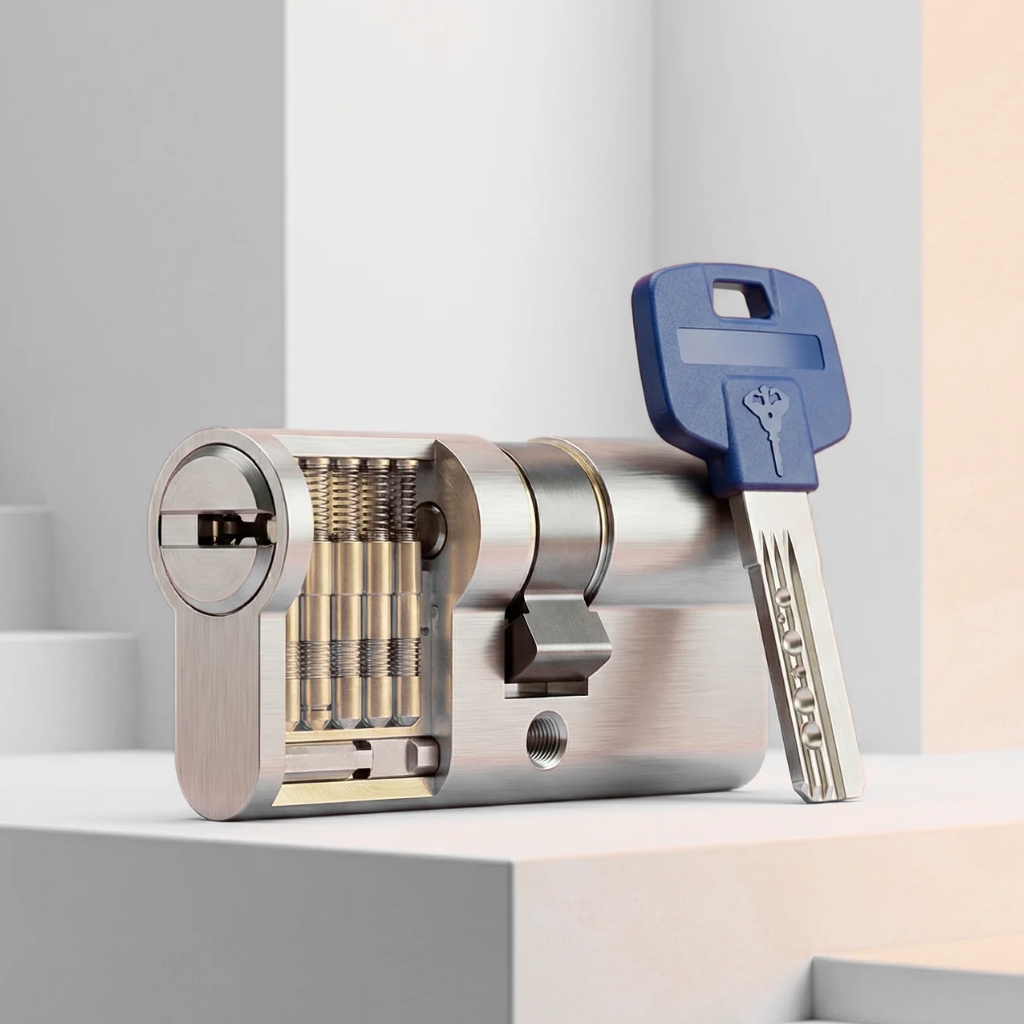
Mortise locks are the heavy, full-bodied locks set into the edge of older commercial and pre-1970s residential doors — Schlage L9000, Sargent 8200, Yale 8800, Corbin Russwin ML2000, and similar. Rekeying one is mechanically the same as rekeying any pin-tumbler cylinder, but the cylinder has to come out of the mortise body first, and the cylinder thread (1" or 1-1/8" diameter, 32 threads per inch typical) is what determines whether your replacement parts fit.
This is a step-by-step. Realistically, mortise rekeys are best left to a locksmith — the body alignment is finicky, dropping the cam during reinstall is a 30-minute setback, and a rekey that goes wrong on a commercial door can lock the entire building out. The cost of a pro mortise rekey ($60-$120 per cylinder) is usually less than the time spent on a DIY attempt.
Rekey steps in plain English
Step 1 — Remove the cylinder
Find the set-screw on the door edge (typically a small flathead, 90 degrees from the cylinder face). Loosen it 2-3 full turns — don't remove it. Insert the original key, turn 90 degrees in the direction that disengages the cam, and unscrew the cylinder counterclockwise from the mortise body. Mortise cylinders thread in/out of the body.
Step 2 — Open the cylinder
Use a follower tool to push the plug out from the rear while holding tension on the front. The pin stack will be exposed. If you don't have a follower, a 1/2" wooden dowel cut to length works in a pinch. Catch the springs and top pins as the plug exits — they will fall out.
Step 3 — Repin to the new key
Insert the new key into the plug. Read the bitting depths from a chart matching your manufacturer (Schlage 0.231" base + 0.015" per increment, etc.). Drop the correct bottom pins into the plug chambers — the new key should sit flush with the top of the plug. Reinsert top pins and springs into the cylinder body.
Step 4 — Reassemble and test
Slide the plug back into the cylinder body, pushing the follower out as you go. Test the new key — it should turn smoothly through 90 degrees both directions. Test the original key — it should no longer turn. Thread the cylinder back into the mortise body, set the cam orientation, retighten the set-screw.
In this guide, we'll walk you through the process of rekeying a mortise lock, step by step. Rekeying a lock is a useful skill, whether you're a DIY enthusiast or a professional looking to secure your home or business.
If you're ready to dive in, check out the video below where we demonstrate the entire process!
In this guide, we'll walk you through the process of rekeying a mortise lock, step by step. Rekeying a lock is a useful skill, whether you're a DIY enthusiast or a professional looking to secure your home or business.
What is Rekeying and Why Do It?
Rekeying a lock means changing the internal pins of the lock to match a new key, making the old key obsolete.
It's an effective way to enhance security without needing to replace the entire lock.
Home Locksmith Services
We offer professional lock change, repair, and rekey services. We're here to keep your home secure with quick and reliable solutions.
Tools You'll Need
Before we get started, here's what you'll need to successfully rekey your mortise lock:
Screwdriver
Follower tool
Pinning kit or new key pins
Key decoder (optional but helpful)
New key
Tweezers (for handling small pins)
Step-by-Step Guide to Rekey a Mortise Lock
Step 1
Test the Keys Start by testing the current key to confirm it works with the lock. Then, try the new key. You'll see that the new key doesn't turn the cylinder, which is why we're rekeying.
Step 2
Disassemble the Cylinder Using a flathead screwdriver, locate and loosen the set screw that holds the cylinder in place. Unscrew the cylinder from the lock body carefully. Then, use a follower tool to push the cylinder plug out, keeping the top pins in place to avoid them falling out.
Step 3
Remove the Old Pins Set aside the old key pins. You'll no longer need these since we're updating the lock to work with a new key.
Step 4
Insert New Key Pins Using a pinning kit, match the new pins to the key cuts of your new key. Place the new pins in the corresponding slots in the cylinder. It's important that the pins sit flush with the shear line—this ensures the key will turn smoothly.
Step 5
Reassemble the Lock Once the new pins are inserted and everything looks good, reinsert the cylinder plug, using the follower tool to guide it back into the lock body. Be sure to screw it in securely but not too tight.
Step 6
Test the Lock Insert the new key and test it to make sure it turns the lock smoothly. Also, test the old key to confirm it no longer works. If everything functions as expected, you've successfully rekeyed your mortise lock!
When Should You Rekey a Lock?
Rekeying is recommended in the following situations: