Updated September 2026. Written and checked by the technicians at Safe & Secure Locksmith, 4105 Macdonald St, Vancouver. Every figure below matches our published price list. Call 604-734-7233 for a quote before anyone is dispatched.
The lock did not fail
Look at photographs of forced residential doors and you will see the same thing over and over. The deadbolt is intact. The lock body is intact. The door is intact. What has failed is a strip of the door jamb, splintered out with the strike plate still screwed to it.
That is the whole argument. A deadbolt is only as strong as what it throws into, and what it throws into on most houses is a thin plate held by two short screws in soft trim wood.
What a builder-grade strike plate is
The plate that came with your lockset is typically light stamped steel, around one millimetre thick, with two screws about nineteen millimetres long. Those screws go through the plate, through the door stop trim, and stop. They never reach the structural stud behind the jamb.
So under a kick, the force is resisted by a small area of finishing timber. The trim splits along the grain, the plate leaves with it, and the door opens. The expensive deadbolt was never tested.
The fix
A reinforced strike plate, meaning heavier steel, a longer body that spans more of the jamb, and four screw positions, fitted with screws around seventy-five millimetres long so they pass through the jamb and the shim gap and bite into the stud.
Now the force is resisted by the framing of the house rather than by a strip of trim. It is a genuinely large change in the strength of the door for a very small amount of money, and it takes about twenty minutes per door.
Do the hinges at the same time. Replace one screw in each hinge leaf with a long screw into the stud. A door can be forced on the hinge side too, and it is the same fix.
Doing it yourself
It is a reasonable DIY job with a chisel and a drill. Remove the old plate. Test-fit the new one, which is usually longer and will need the mortise extending. Chisel the recess so the plate sits flush, because a proud plate stops the door closing and you will end up removing it. Drill pilot holes so the long screws do not split the jamb. Fit, then test that the bolt throws fully with the door closed.
Stop and call someone if the jamb is already split, if the door is metal or rated, or if the bolt does not currently extend fully, because that last one means the alignment is out and a new plate in the wrong place makes it worse. That is door repair territory.
The full-length option
Where the jamb has been forced before, or the door is the only entry to a suite, a full-length jamb reinforcement is the stronger answer: a steel channel that runs most of the height of the frame and takes many long screws into the stud. It costs more and it looks industrial, but it removes the failure mode completely.
Some kits reinforce the door edge around the lock as well, which helps on a door where the bolt hole is close to a weak edge.
Why this is the best value in home security
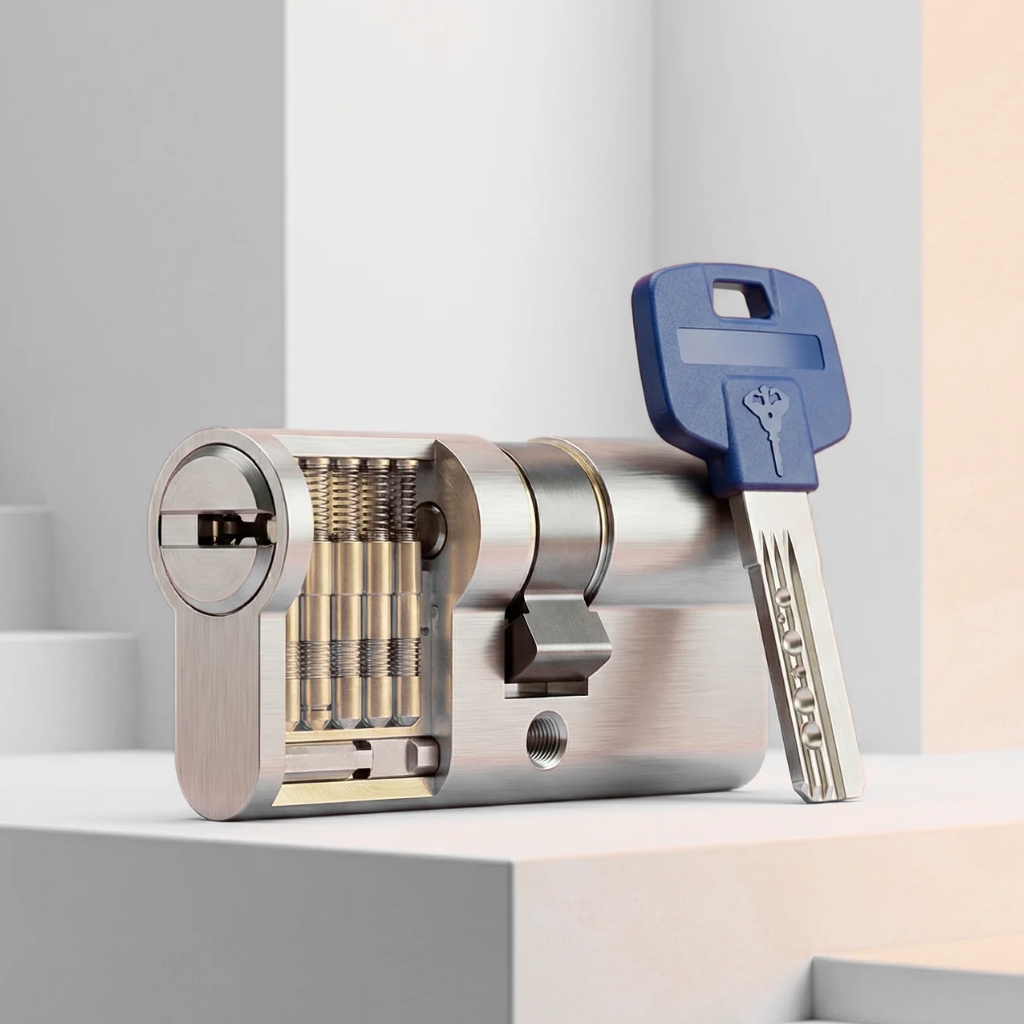
Compare it against the alternatives. A high-security cylinder resists picking, bumping and key copying, and is genuinely worth having where that is the threat: high security locks. But picking is not how residential entry happens. Force is, and force meets the strike plate.
Rekeying at $25 to $45 per cylinder is the right spend when the key population is the problem, meaning a move or a lost key: lock rekey Vancouver. It does nothing about a kick. The strike plate is the cheapest thing on the list that changes what happens under force.
Check yours in one minute
Open the door and look at the plate in the jamb. Two screws or four? Take one out: is it around nineteen millimetres, or seventy-five? Is the plate thin enough to flex under a thumbnail? Does the bolt throw its full length into the hole without the door being pulled?
Two short screws in a thin plate is the standard finding, and it is worth fixing this month rather than eventually. The rest of the walkthrough is in the home security checklist and the wider picture is in how burglars actually get in.
Getting it done
We fit reinforced plates and jamb reinforcement as part of a normal service call, and it is usually done alongside a rekey or a lock change so you pay one visit rather than two. Call 604-734-7233 or book online, and the service page is residential locksmith.
Article history
Updated September 2026, with the prices checked against the shop sheet.