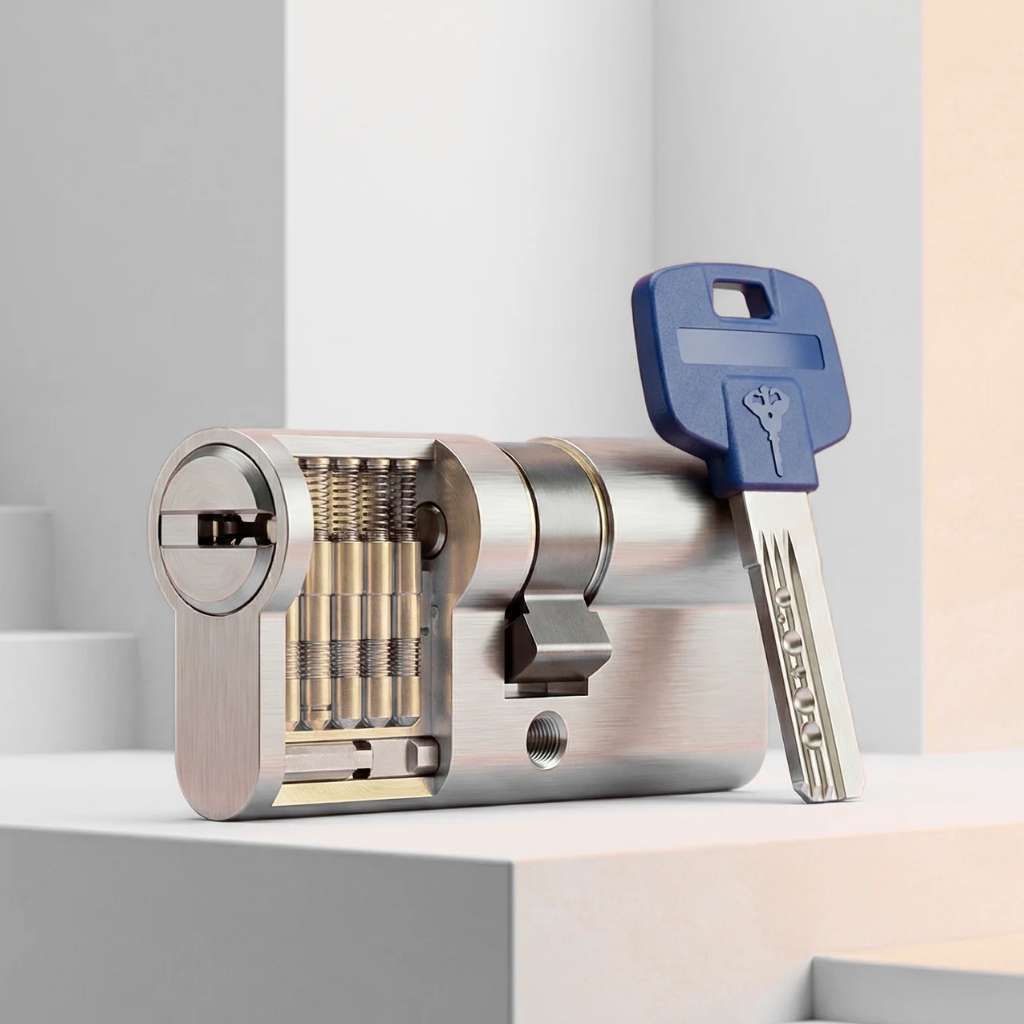
A key usually breaks off because it's worn thin, bent slightly, or the lock mechanism is stiff with rust or old grease. Stop turning or wiggling it right away. Most of the time the broken piece can be pulled out without damaging the lock, but only if you handle it carefully from here.
Why keys snap off in the lock in the first place
Brass keys wear down over years of use. The metal gets thin right where it meets the shoulder of the key, and that's the weak point. Add a stiff lock, a cold morning, or someone forcing a key that doesn't quite fit, and it snaps right at that spot.
In Vancouver, rain and humidity cause rust inside older lock cylinders, especially on exterior doors facing the street. A rusty lock needs more force to turn, and more force on a worn key means more broken keys. If your front door lock has been sticking for months, a snapped key is often just a matter of time.
What not to do when a key snaps in the lock
- Don't keep turning the broken piece. This can push it deeper into the cylinder or shift the pins out of place, making extraction harder.
- Don't use super glue on the key. People try gluing the broken end back together to pull it out. It rarely works and often glues the pins inside the lock, which turns a simple fix into a lock replacement.
- Don't yank with pliers from the outside if the piece is flush with the cylinder. You'll likely just round off the edges and lose your grip point entirely.
- Don't drill the lock yourself. Drilling is sometimes the right call, but it's a last resort a locksmith should make, not a first move with a cordless drill from the garage.
How to try removing a broken key yourself
If part of the key is still sticking out of the lock, you've got a decent shot at getting it out without help. A pair of fine-tipped tweezers or needle-nose pliers can grip the exposed end. Pull straight out, in line with the keyway, not at an angle.
If nothing is sticking out, a broken key extractor tool (sold at most hardware stores for ten to fifteen dollars) works better than tweezers. Slide the thin, barbed end of the tool alongside the broken key, past the break, then pull back slowly so the barb catches the key and drags it out. This takes patience. Rushing it usually pushes the piece further in.
If you don't have an extractor tool, a thin jigsaw blade or a strip cut from a tin can, inserted alongside the key and twisted gently, has worked for people in a pinch. It's not elegant, but it's a reasonable stopgap if you're locked out and it's late at night.
When to stop and call a locksmith
If the key is flush with the cylinder and you can't get a grip on it, stop. Forcing it from here usually means the lock has to come apart anyway, and a locksmith can do that without scratching up your door or damaging the strike plate. Same goes if the broken piece has gone in sideways or the lock was already sticking before this happened.
Car keys snapped in an ignition or door lock are a different problem entirely. Ignition cylinders are smaller and more fiddly, and a DIY extraction attempt in a car lock has a real chance of damaging the tumblers. For that one, it's worth calling in help through Automotive Locksmith Vancouver rather than risking it. One thing to flag directly: if you've lost all your keys to a Mercedes-Benz from 2016 or newer, that's a job we can't do an all-keys-lost replacement for, so plan around having a spare key cut before that becomes your only option.
What it typically costs to fix
Extracting a broken key from a standard residential lock, when the lock itself isn't damaged, typically runs $80 to $150 CAD depending on how deep the piece is lodged and how old the lock is. If the lock has to be taken apart or the pins are damaged in the process, you're looking at a rekey or lock replacement on top of that, which typically adds $60 to $200 CAD more depending on the hardware. These are typical ranges, not quotes, since every lock and every break is a little different.
If you're already due for new hardware, this is also a reasonable moment to upgrade. We've written before about smart locks vs deadbolts if you want to compare options while the lock is already apart.
Get help when you need it
If you've tried extraction once or twice and the key hasn't budged, stop and call. Have the lock's brand if you know it, a rough sense of how old the lock is, and whether the door still locks and unlocks with a spare key if you have one. For home locks, reach out through Residential Locksmith Vancouver, and if it's happening outside business hours or you're locked out entirely, Emergency Locksmith Vancouver is the faster route.
Frequently asked questions
Can I still lock my door if the broken key is stuck inside?
Usually not safely. A broken key sitting in the cylinder can block the pins from seating properly, so even if the door appears to lock, it may not be secure. Treat it as an unlocked door until it's fixed.
Will a locksmith need to replace the whole lock?
Not always. Most broken key extractions leave the lock mechanism intact, especially if the key snapped cleanly and wasn't forced further in. Replacement becomes necessary mainly if the pins are bent or the cylinder was damaged trying to remove it.
Why did my key break if I wasn't forcing it?
Metal fatigue is the usual cause. Keys flex slightly every time they're used, and after years of that, a thin spot near the shoulder can snap even with normal, gentle use. It's worth having keys that are visibly bent or worn copied onto a fresh blank before that happens.