What a master key system is
Master key systems solve one problem: a building where different people need different amounts of access. Each door gets its own key that opens only that door, and one master key opens every door in the group. Nobody carries a ring of thirty keys, and nobody is handed access they should not have.
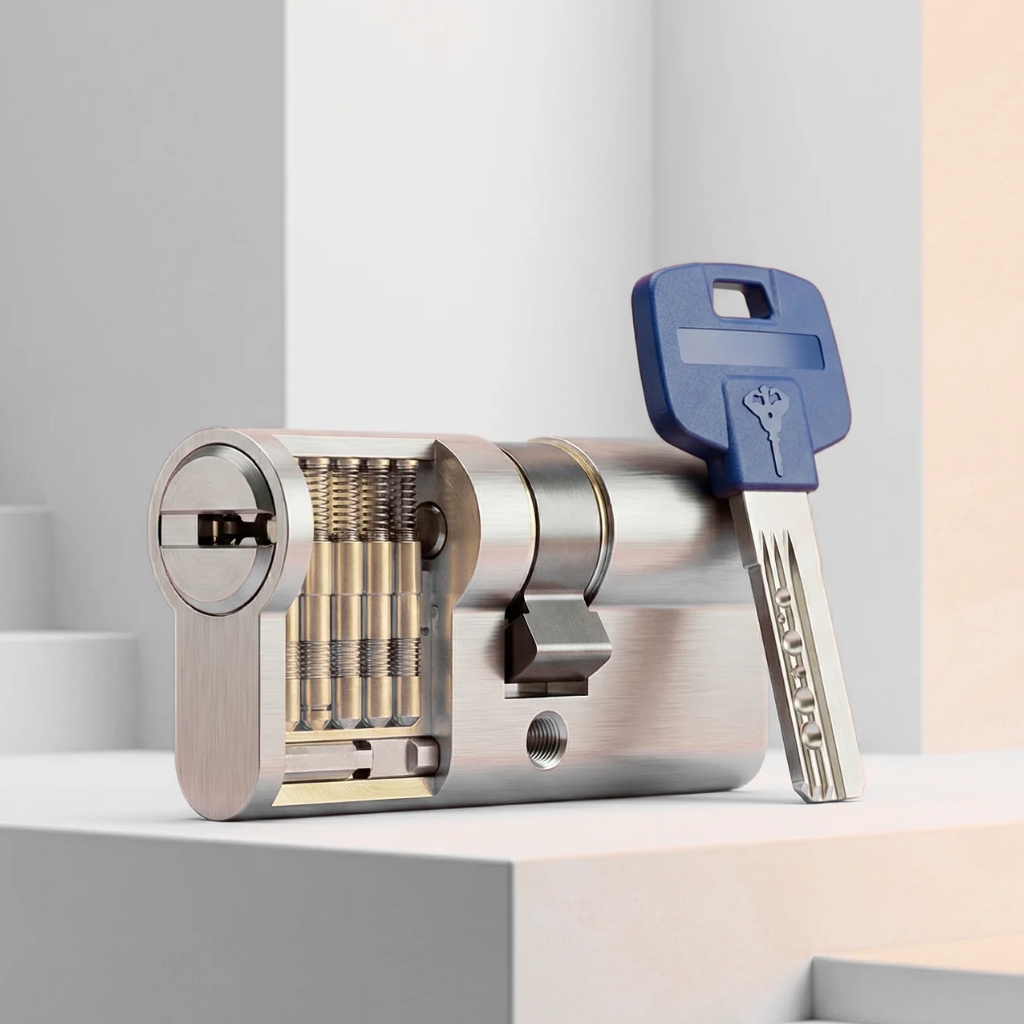
It works because a cylinder can be pinned to accept more than one key. Extra pins, called master wafers, create a second shear line, so both the individual change key and the master lift the stack to a working position.
The hierarchy
Change key
The bottom level. Opens one door. This is what a tenant, a staff member or a resident carries.
Master key
Opens every door in one group: a floor, a department, a building. This is the manager or the caretaker key.
Grand master key
Opens every group. On a multi-building site this is the owner or the facilities lead, and there should be very few of them.
Beyond that you can add cross-keying, where a specific door accepts several change keys, which is how a shared meeting room or a service cupboard gets handled without giving anyone a master.
What it costs
A master key system starts at $300 for the system design and setup, plus $30 to $80 per door cylinder on standard hardware, or $60 to $200 per cylinder on a restricted high-security keyway. That includes a documented key registry and an authorisation process for future copies. Figures are on the prices page.
The setup charge is not a formality. Someone has to design the key bitting so every combination in the system is unique, no change key accidentally opens a door it should not, and the system has room to grow. A badly designed system runs out of usable combinations two years in, and the fix is repinning every cylinder.
The registry is the real product
Hardware is the visible half. The half that matters over years is the record: which key opens which doors, who holds it, and who is allowed to authorise a copy. Without that, a master key system decays into a pile of keys nobody can account for, and the security is gone even though the locks still work.
Pair it with a restricted keyway and the control becomes real: the blanks are not sold to the public, copies are cut only to a registered code with authorisation, and a departing employee cannot have a spare made at a kiosk on the way out. See the Mul-T-Lock interactive system and high security locks.
Who needs one
Apartment and strata buildings, where a caretaker needs the lobby, the mechanical room and the bin store but not the suites. Offices, where cleaners need floors and not the server room. Retail with a stock room and an office. Schools, clinics and warehouses. Any site where more than a handful of doors are held by more than a handful of people.
A single-family house does not need one. What a house usually wants is keying alike, which puts every exterior door on one key with no hierarchy: can a locksmith make one key for all doors.
The trade-offs, honestly
Master keying adds pins to each cylinder, and more pins means slightly more ways to manipulate a lock. On standard hardware the difference is academic against realistic threats. On a site where it genuinely matters, the answer is a high-security cylinder designed for master keying, not the avoidance of master keying.
The bigger real risk is administrative. A lost master is expensive, because it may mean repinning every cylinder in that group. Limit the number of masters that exist, record every one, and treat a lost master as an incident rather than an inconvenience.
Planning one
Start by listing the doors and the groups of people, not the hardware. Who must open what, and who must not. Then count doors, note the hardware on each, and identify anything unusual: mortise bodies, panic hardware, electric strikes, rated fire doors. That list is what a design is built from.
Build in headroom. A system sized exactly to today's door count has no space for the unit you add next year. We size for growth by default. The service page is commercial locksmith.
More than one location
A business or a property manager with several sites has the same problem at a larger scale: keys that open more than they should, and nobody sure which. The answer is the same hierarchy one level up. Each site gets its own master, and a grand master sits above them for the few people who genuinely need every building.
Three things matter more across sites than inside one building. First, one register: the records for every location should live in one place, so a lost key at one address can be traced to the doors it opens. Second, one keyway family: putting every site on a related restricted keyway keeps copies under control and lets the system grow without starting again. Third, fewer grand masters: every grand master key that exists is a key that opens everything, so keep the count small and named.
Sites can be converted one at a time, which spreads the cost and keeps each building working while it changes over. How we survey, quote and keep the records for multi-site customers is on commercial locksmith.
Keeping it working
Review the registry on a schedule, not when something happens. Rekey the affected group when a master goes missing or a keyholder leaves without returning a key. And rekey on tenant turnover as a matter of course, which is the argument in how often should a business rekey its locks.
Article history
Updated September 2026, with a section on running a system across more than one location. This page also carries the material from the older Understanding Master Key Systems Benefits And Applications article, with current pricing and a proper account of the registry. To scope a system, call 604-734-7233 or contact the shop.